Eat to Excel: From the Classroom to the Court and Wider School Community, How Are You Supporting an Enhanced Understanding of Optimal Fuelling in Youth Sport?

In blog three we explored the importance of the learning cycle and transferability of learning in the domain of performance analysis. It was proposed that the use of a reflective cycle incorporating review and adaptation can support holistic development and promote critical analysis skills in young sportsmen and women in school sport. To enhance this approach, pupil and coach engagement is required to encourage autonomy for growth beyond sport.

These principles are not exclusive to performance analysis and should underpin the aims of sport science provision in youth sport, including the provision of nutrition support. The promotion of a food first approach and goal ordinated fuelling strategies underpin the design of our nutritional interventions. As such, the aim of this blog is to further outline the key principles we have used to engage a range of stakeholders in positive behaviours with food and promote optimal fuelling.

A successful nutrition strategy in this context extends beyond sport; it must provide multiple impact points with which to optimally inform the desired behaviours around food choices. Our role here is to highlight the importance of understanding energy requirements for, not only sporting activities, but the entire school day. This will ensure appropriate fuelling to fulfil one’s potential in the classroom and beyond. In doing so, we aim to support the ability of our young people to express skills and abilities across multiple domains. Furthermore, this approach aims to promote ownership of decision making with food and provide a skill set to support the transition through and beyond sport and school careers.

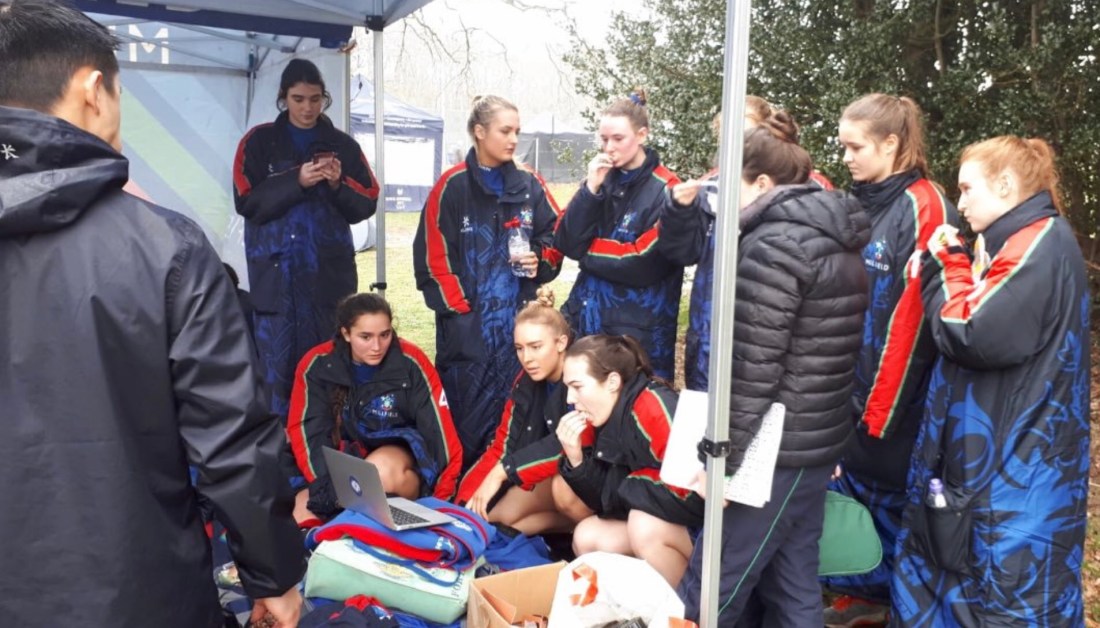
Adopting a mentorship approach rather than authority driven, our method supports the eb and flow of responsibility between pupil and nutritionist. We believe this is a key consideration to successfully influence behaviours. Our one to one and squad support is designed to encourage honesty, open communication and provide a platform for guidance and team work. One of our key focus points is that of promoting periodized nutrition, widely documented in research and applied practice as key for facilitating adaptation. Developing fuelling strategies based on energy demands and specific pupil goals initiates physiological adaptations to support pupil development – from a full day of academic lessons followed by a competitive sports fixture to a day of revision. By understanding the practical implications of metabolic responses to physical and cognitive stress we can translate the science into the field, with the aim of appropriately fuelling young people from the classroom and the court.

To summarise, well positioned nutrition provision in this context requires a comprehensive understanding of the demands on young people in school, sport and beyond. An awareness of the position of the discipline within a large holistic nature of learning and development in youth sport allows us to be focused on the individual and be purpose led. By encouraging continued learning, periodized approaches and research-based practices we can optimise development and augment behaviour to instil desirable habits. Success in this area is catalysed by strong relationships and an autonomy supportive approach to drive a deeper understanding of food choices. From the classroom to the court and wider school community, how are you supporting an enhanced understanding of optimal fuelling in youth sport?
What Are You Doing to Optimise Teaching and Learning Through the Analysis of Youth Sport?

In our preceding blog, we considered the importance, application and assessment of world class basics in movement skill development for young people in school sport. We proposed the need to be pupil centred and development focused in optimising fundamental movement skills and movement competency. Critical to truly optimising this approach is the development of skilfully designed, appropriately positioned and optimally delivered teaching and learning practice.

In the domain of performance analysis, pupil and coach engagement with video and analytics is the critical time point that must be optimised to enhance the understanding of personal and/or team development. In doing so, we have an amazing opportunity to facilitate self-directed learning and reflective ability through sport. Therefore, the following blog will expand on the role of analysis in youth sport and the responsibility of analysts to support the development of self-directed learning.

Broadly, we aim to encourage autonomy and deliver a supportive approach to learning in the analysis of sporting activity. We aim to create an environment where pupils and coaches take ownership and responsibility for their development through visual and statistical feedback. Our approach to analysis offers breadth and depth to support a wide demographic of young sports people, through a variety of stakeholders.

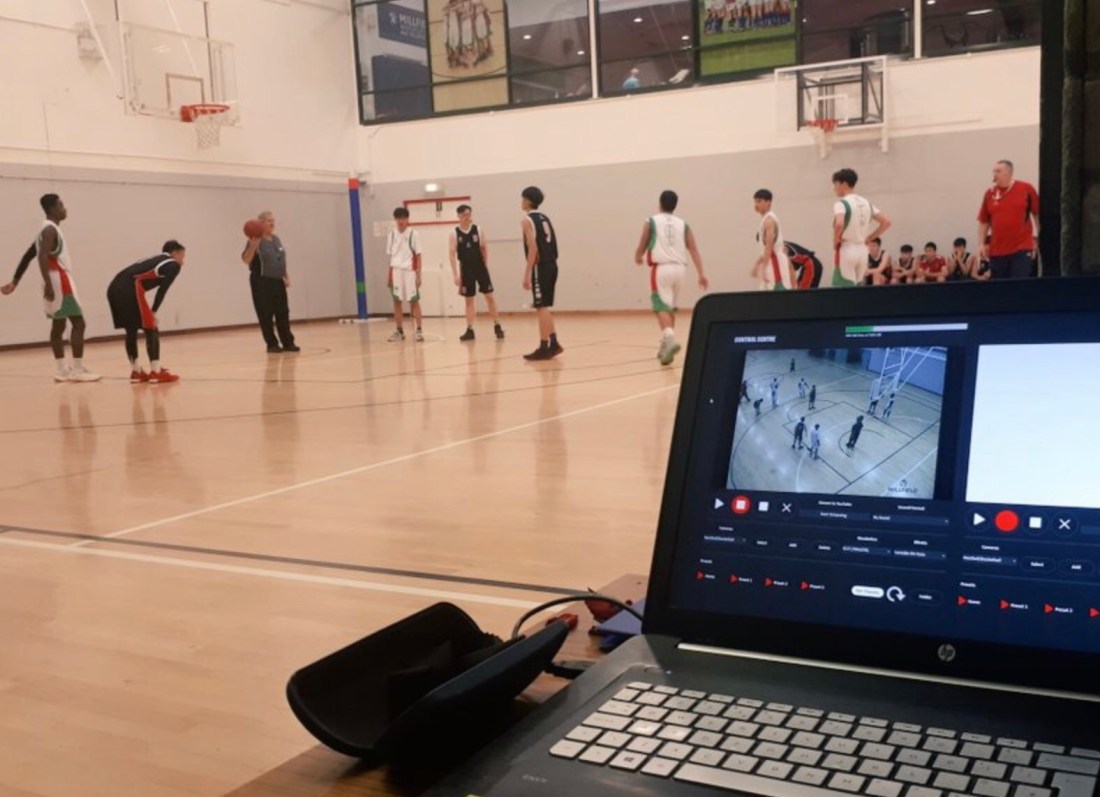
Our online analysis platform is designed to encourage fast and interactive engagement with video and statistical content. The platform provides the opportunity for coaches to interact with pupils and visa versa to support the coaching process from the field of play into a virtual learning domain. Coaches and the analyst can actively track and monitor team and individual usage on the platform to identify engagement and interaction with the content. This allows us to constantly review and adapt our offering to optimise content, engagement and education.

The cycle of review and adaptation is one that is constantly evolving with analysis in our environment. This process can be aligned to the concept of the experiential learning cycle. This concept suggests learning can be more than experience (concrete experience) and reflection (reflective observation). The cycle suggests learning can expand further to challenge transferability (abstract conceptualisation) and generate new learning opportunities (active experimentation). In our analysis provision, we aim to embed the opportunity for learning via experience and reflection as the norm. Our challenge then, is to delve further into the potential for transferability, new learning and experimentation.

An example of this can be seen through reorienting the analysis of traditional sporting statistics to conceptualise and experiment with the process of analysing socio-behavioural actions within competitive match play. In application, this learning experience has generated the opportunity for coaches and pupils to consider the interplay between team culture, values and principles and in-action behaviours and responses to challenge and stress on the field of play. This included the self-reflection of off the ball behaviour, conduct with officials and opposition players and enhanced methods to support team mates to fulfil their potential. This example provides a case study with which explore the transferability of learning expressed through the activity of sport but embedded in a more fundamental intra and interpersonal development philosophy.

In summary, analysis, like any other sport science provision can support self-directed learning and reflective practice. Optimising the cycle of experience, reflection, transfer and new learning may be critical to augmenting a truly holistic and development focused youth sport analysis programme. Conceptualising analysis as a vehicle to support learning allows us to truly orientate our efforts to explore learning and development through and beyond sport. What are you doing to optimise teaching and learning through the analysis of youth sport?

Are You Focused on World Class Basics? If Not, Why Not? A Process of Learning and Development in the Physical Domain

In our first blog post, we reflected on the iconic release of the Avengers: Endgame movie and its connection to our department and wider school approach of supporting and optimising the learning and development of young people through their domain of interest. The blog referenced a systematic approach to supporting learning and development within the athletic development department titled ‘What does it take to transition?’. The aim of this second blog post is to expand further on the why, how and what of this approach and the lessons learnt across the 5 years of its implementation. This narrative will aim to propose the importance of establishing world class basics within the physical development of youth athletes. Whilst reading this narrative, one may consider if the basics are often neglected through the professionalisation of youth sport and its coaching fraternity.

Our athletic development department philosophy seeks to position the pupil at the front and centre of our decision making. We see our role as contributing to part of the pupil’s journey through sport and it is our duty to lay the foundations of high-quality movement skills, amongst other physical qualities, to allow the pupil to optimise training and coaching through and post Millfield. In short, we are committed to doing the basics to the best of our ability to allow other physical training practitioners and the pupils themselves to reap the rewards later down the line.

Research evidence is compelling on the benefits of fundamental movement skill (not functional movement skill or foundational movement skill) and movement competency development on a host of physical, psychological and social markers, such as activity levels, self-belief, body composition and functional independence. As sport science practitioners in youth sport we have a duty of care, a moral and ethical right to invest in the development of these skills and competencies for the future health and wellbeing of our young people.

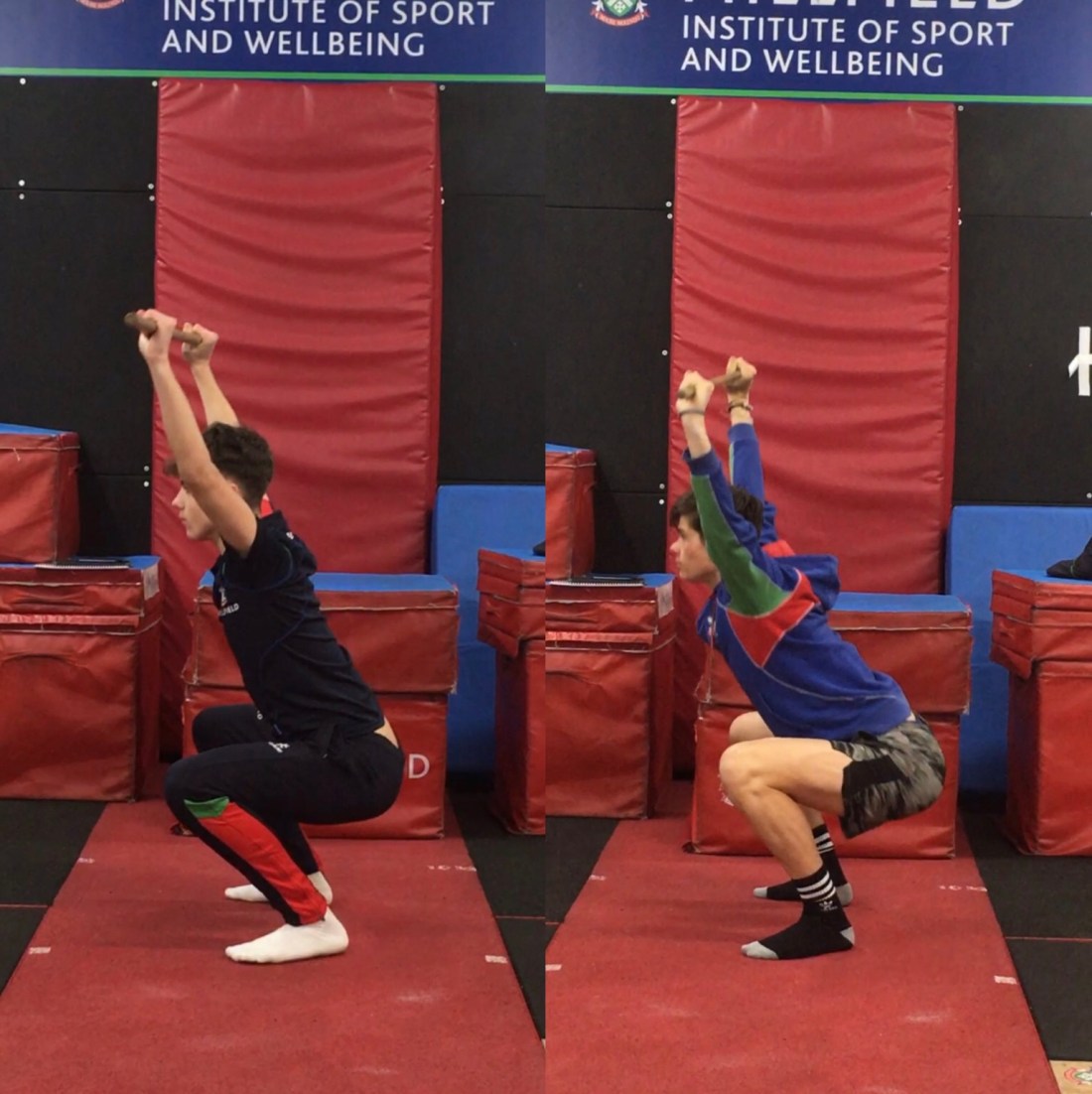
Through sport at Millfield we have embedded a physical profiling battery and associated programming interventions targeting the development of competency benchmarks and training adaptations associated to these physical qualities. For fundamental movement skills; the building blocks of more developmentally advanced movement forms, and movement competency; the degree to which an individual can perform goal directed human task, we now have a large and ever-growing data set through regular profiling. The assessment of this data has allowed us to highlight the skills and ability of sports pupils through year groups and across a wide range of sports.

We are building a compelling narrative that has and will continue to direct our attention to the development of world class basics in movement skill. Our evidence tells us that such skill and competencies are not differentiated by gender but differentiated by advanced chronological age. This tells us we must invest early in these physical qualities. It highlights that high-quality skill development takes time and we must be comfortable to not rush this process. We know that involvement in particular categories of sports may be advantageous for particular skills and competencies. By establishing normative data across chronological year groups, sports and gender we know we can make positive changes in movement quality and have confidence that the knock-on effects will be beneficial both on and off the sports field.

Through establishing clarity in our roles within a youth sport context, by being pupil centred, development and process focused and keeping our ‘end game’ in mind, our focus on the learning and progression of the skills and capacities contributing to the world class basics will allow our sports pupils to thrive as they transition through and beyond sport. Are you focused on the process of developing world class basics in your domain of practice? If not, why not?

What is your Endgame?

When thinking about this first blog we wanted to link it to something current, tangible and, as luck would have it, so comes along one of the biggest popular culture events of the last 10 years. Marvel (comics) have just released a film which ties together 10 years of storytelling, marking the end of the most successful film franchise in modern cinema. However, despite Avengers: Endgame being an ending it is also a beginning for a new line of storytelling to come.

Now what on earth has this got to do with school sport or sports science provision within a school? The film got me thinking about our pupils and the goals and aspirations they have within sports and academics. These individual stories are rich with success, failure, and all the emotions under the sun, which we are privileged to be privy to when we get to be a small part of their journey. Some will aspire to the elite level sport when they leave Millfield, and some will achieve this, however the majority will transition to university or the workplace not ever making the echelons of elite sport. In either context making the transition from school to adult life is full of challenges, success and failures that all should be embraced as part of the journey.

In our school gyms we have the phrase ‘The journey never stops’. There are many connotations to this phrase and like the film it implies that the story is ever evolving but is also punctuated with transitions from one chapter to another. This is how our support/ sports science team see a pupil’s time at Millfield. Engaged with our athletic development, Physiotherapy and performance analysis programmes, individual chapters in the pupil’s story evolve, allowing them to transition to their next challenge within sport or life in general. This maybe providing them with the movement competency and education around athletic development, it may be providing them with the tools to allow them to overcome an injury, or understand their own performances empowering them to achieve great things within their sport. The value of these types of experiences are seen not only in the context of a pupil’s sport, but once they have transitioned into adult life.

A major example of this is the athletic development department’s ‘what it takes to transition’ framework. Over the last 2-3 years the team has sought out the key features of physical skill and performance, across multiple sports, in multiple settings, which our pupils will transition to when leaving Millfield. So rather than looking at the elite pupils only, we appreciate most of our pupils will move on to programmes which will continue their development and engagement with sport, but not be at the elite level. This makes the Endgame for our pupils to be objective and tangible, whilst avoiding poor practice when only focusing on getting pupils bigger, stronger, faster and serving to inflate the ego of the coach with fancy short-term success.

Some schools and clubs may not subscribe to this idea. The end goal for these programmes may be to focus on results as a means of demonstrating development of individuals, with the perception of success off the back of winning. The inference being that the pinnacle of the pupils sporting career is being part of a winning school side. The reality of the Endgame is in fact a very different proposition, as we have suggested. This is not the Millfield way, and it is especially the counter to our philosophy within Millfield Pupil Support Service. The goal for us is to be traditionally different and provide an environment that is learner centered and development focused to realises the potential within each pupil we see.

The journey never stops, it is punctuated with transitions and chapters which we, as practitioners must prepare our pupils for to the best of our ability. Success is not based on results, times and weight, but a process of development which culminates in that individual achieving their own potential at whatever level of sport, career or journey they wish to follow. It is not about the few but all those we have the privilege to briefly join on their journey towards their Endgame.