
To be Prepared is Half (May be More) of the Victory: The Importance of General Physical Preparation in the Youth Athlete.
In our final blog of 2019, we looked into fuelling in the developing youth athlete. We proposed that providing engaging and impactful nutrition support will be an important objective for nutrition at Millfield moving forward. The use of clear, consistent messaging across the campus and well positioned education and guidance on fuelling will be important to optimise the potential of our pupils in sport and beyond. In short, we suggested knowledge isn’t powerful until it is applied, therefore we believe our nutrition education must be a ‘live’ and evolving process with pupil development at the heart of decision making and planning.
In our first blog of the new decade, we aim to continue to promote the development focused and pupil centred message as we explore the fundamental importance of general physical preparation in the athletic development of our sports pupils. We believe preparation to be half (may be more) of the victory in developing skilful movers and robust young sports people.
General physical preparation (GPP) is typically understood as the foundation upon which more developmentally advanced physiological adaptations are formed. As such, GPP is typically followed by training blocks that are more corresponding to the demands of the sport in which the individual is preparing for. Thus, in the context of youth physical development, in which an emphasis on technical mastery, consistency of technical execution and the development of force production are basic tenants, GPP becomes a critical, repeated and extensive training paradigm to prepare the youth athlete for future and more advanced training means.
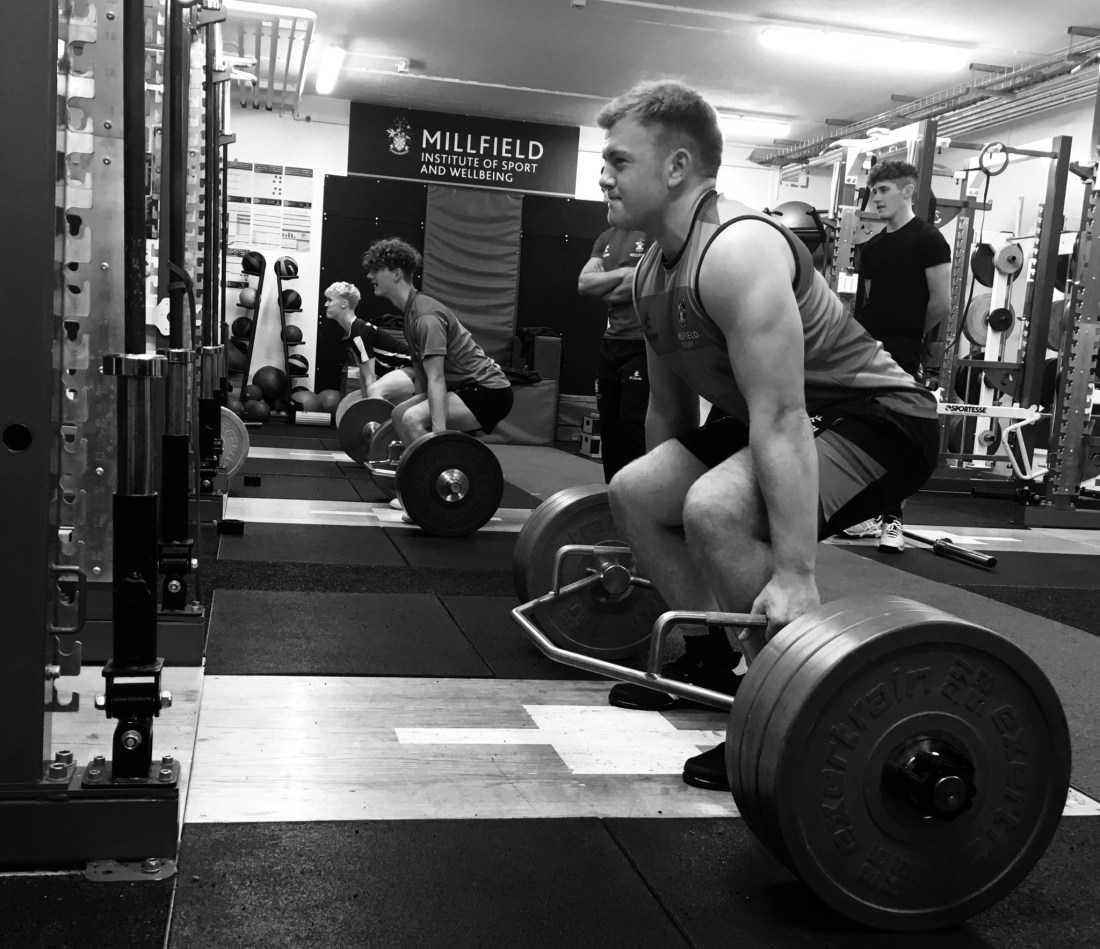
In this context and based on our interpretation of GPP for youth development, we believe GPP can be executed through the following principles:
• Programme the concurrent training of physical qualities – Given the low to moderate training age of many youth athletes, the vertical integration and horizontal sequencing of training aims provides an opportunity to enhance technical mastery across a wide range of skills and develop neuromuscular adaptations across a range of training methods.
• Preference for volume over intensity – In the context of a 5, 10, 15 year training process and given a bias towards technical mastery and the development of strength capacity, a preference for volume driven programme gives the opportunity to better achieve these aims.
• Appropriate exercise variation acts as a driver for neuromuscular adaptations (Fonseca et al., 2014) – Given points 1 and 2 above, exercise variation rather than intensification is utilised to support the development of neuromuscular adaptations to movement skill and strength training. This point is both developmentally appropriate for our most junior (fundamental movement skill focus) and most senior (development of basic strength, acceleration, change of direction ability) youth athletes.
• Elevating the individual’s validity and reliability of exercise technique (Siff, 2003) – Given our wider aim of preparing youth athletes to successfully transition into the next phase of their sporting and physical training journey’s, validity (accuracy) and reliability (repeatability) of exercise technique is of critical importance. Our evidence to date, suggests this take time and we need to start early to ensure this aim is achieved.
• Elevate the individual’s technical strength threshold – To complement point 4, and as intensity in any strength training task begins to be elevated, we believe we must work just below the youth athlete’s technical strength threshold (the point at which force expression relative to load is compromised and thus a deterioration of technical execution is presented).
The principles outlined above position the young athlete’s physical development and future physical preparedness at the heart of GPP. We believe the process of GPP in young athletes is of critical importance to their future engagement and development in sport at a variety of levels and should be implemented with the past, current and future physical ability of the individual in mind. GPP should not be rushed and will likely form the majority if not all of the training process for the developing youth athlete.
 Millfield Institute of Sport and Wellbeing