
In our previous blog we explored the importance of understanding our motives, goals, task and communication preferences as sport science practitioners in supporting and challenging the development of young people through sport. We concluded by suggesting knowing thy self can be the beginning of all wisdom and the starting point to enhancing learning through youth physical development. In this blog, we will more closely explore youth physical development through a review of numerous internal research projects that have aimed to shed light on the opportunities and challenges in supporting the physical development of sports pupils within a school sport programme.
Over the past 18 months the athletic development and physiotherapy team have presented their work at national conferences (United Kingdom Strength and Conference Annual Conference, Open University Annual Conference, British Association of Sport and Exercise Science Annual Conference, English Institute of Sport Talent Pathway Symposium) with the aim of disseminating findings and sharing insights into the profile, development and wellbeing of pupils within our domain of practice. In this blog we will press pause and consider some broader take home messages from our projects.
From the analysis and dissemination of our work to date, this is what do we think we know:
• The development of movement competency and fundamental movement skills evolves in line with chronological age and therefore takes time to be expressed – Do rush it, invest early, be consistent with a focus on high quality movement skill and you will reap the rewards later down the line
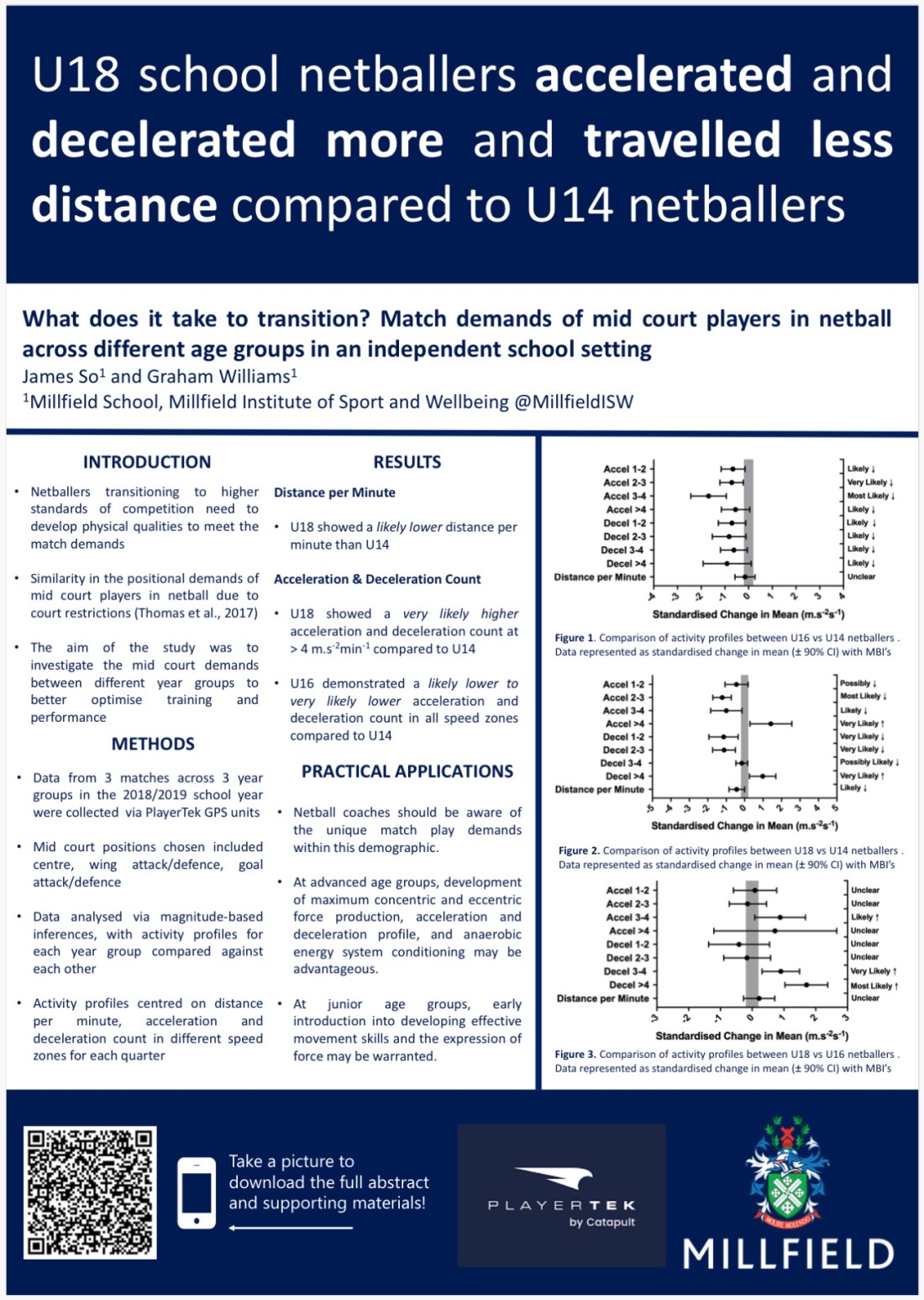
• High speed running volume and intensity not total running distance seems to be the critical step change in physical activity demand in the transition from our more junior to more senior sports teams (football, rugby 7s, netball) – Invest early and be as skilful as possible in the ability to accelerate and reach and maintain max velocity running, prepare them for them step up
• It’s not all about the physical stress, therefore be vigilant of the psychological load on sports pupils particularly around markers of subjective energy levels, stress, and mood – Encourage positive coping strategies, promote supportive social networks, think holistic in your approach
• Beware of a hazard phase in change of direction ability in sports involving large volumes of cutting and turning. Performance markers may show more variance circa and post puberty – Track change over time, offer a plan B if and when required, be consistent with the development of technical mastery over time
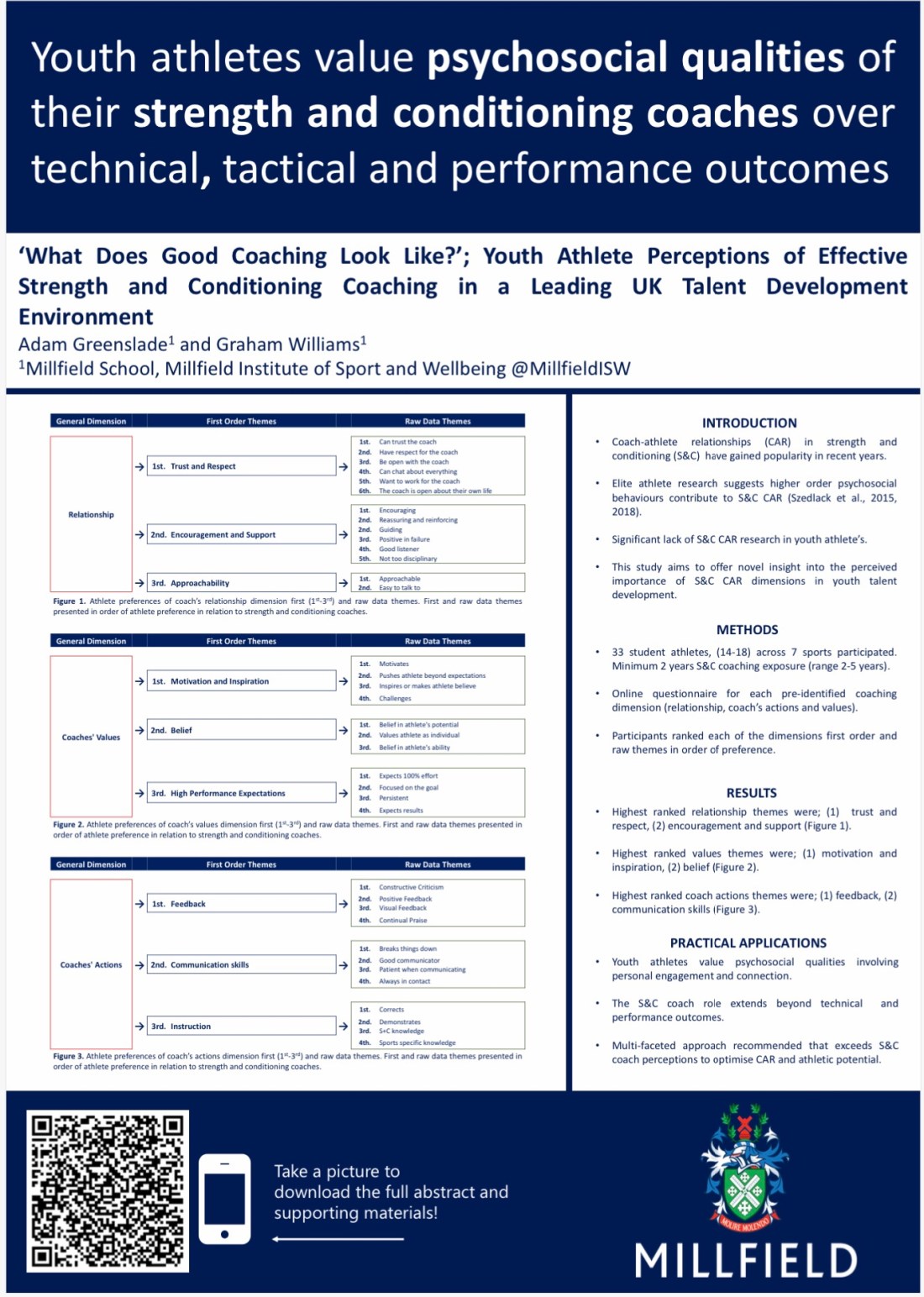
• The role of the athletic development coach extends beyond the development of physical qualities. A multifactorial approach to physical is recommended to optimise the coach-athlete relationship and athletic development – Build trust and respect, motivate and inspire young people to go the extra mile, provide a range of feedback that challenges and supports development
In summary, we believe a focus on the technical mastery of movement skills and competencies will pay the biggest investment over time. In parallel, it is necessary to provide small doses of higher threshold running and change of direction exposure in preparation for more advanced stages of development. More generally, take time to consider the broader perspective of physical development in youth sport. The coach-athlete relationship in this context, built on personal engagement and connection, may provide the opportunity to optimise physical development and support the holistic wellbeing of the youth athlete, particularly in relation to psychological load.
 Millfield Institute of Sport and Wellbeing