
In our previous blog we explored the challenges and opportunities of riding the volcano of analytics in a multi-sport environment. More specifically, we explored the importance of simple technology and an approach which aims to optimise infrastructure, education, services and enhanced coach education. In this blog, we will look at the challenges and opportunities of organising physical training to allow suitable and appropriate athletic development with pupils in a school sport context.
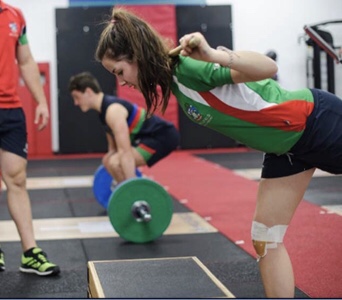
In an environment where sporting development is dynamic and individual experiences are constantly changing, it is important to find a way to organise physical development training to allow the best possible chance for an improved expression of skills or capacities. Systematically allocating physical training units in accordance with the needs of the individual and their long term aims and objectives is at the heart our approach. This requires consideration of the holistic nature of training, competition and the unpredictable nature of development within a youth sport context. In addition, and specifically in a school environment, the cognitive and psychosocial load of academics and pastoral commitments are also critical to consider. As such, the organisation of physical training may be contextualised within short, medium, and long-term phases to achieve the desirable outcomes. This method allows us to be dynamic and flexible whilst maintaining a degree o consistency over an extended period of time.
With movement skills and capacities essential to what we do, high quality competencies, fundamental movement skills, tolerance to load and training intelligence are the foundations to our approach. In the short term and where opportunity allows, different training units are developed concurrently, with different emphasises for each of them on different days (i.e. speed, strength, fitness, recovery, skill). An easy way to organise the training units on each day can be through matching up the training intensity of the day. Each day can be classed as a high intensity or low intensity day with the units reflecting it as so. Organising training sessions in this way can allow multiple qualities to be trained at the same time without any hindrance to progress. This way of organising training weekly is known as horizontal sequencing with vertical integration. This works especially well with team sports as they require various qualities to be developed in conjunction.
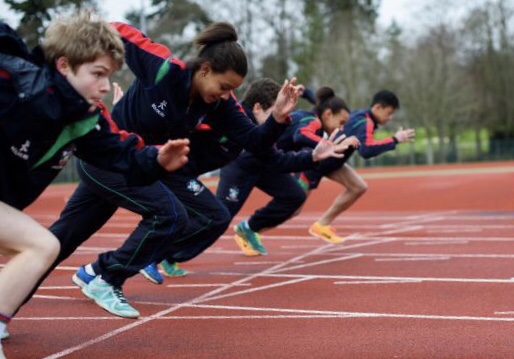
In a medium-term phase (monthly), the focus of training can generally undulate throughout each half term in a wave-like fashion. There may be a more concentrated bias on global gym-based skills in any one point of time, before moving onto more specific qualities that have a greater transfer to the sport itself. After developing that foundation, a swap in the emphasis in the following block of training would follow. This reduces monotony in training phases and allows positive adaptations to be made through variations in training periods. The length of undulation across phases may differ across sports, but the general model is still applicable, highlighting the advantage of the flexible, wave-loaded format in the medium-term. Finally, in the long-term (across a school year), phases are organised into three different blocks, reflecting the three terms across a school calendar year. The overall block structure provides a clear blueprint for the otherwise more flexible components when considered more specifically.
Overall, our method of organising physical training allows us to deliver our philosophy and ideologies towards athletic development systematically, while being dynamic with the ability to flex in our practice. Given the nonlinear nature of pupil development in sport, we are able to be adaptable as we plan, organise and delivery physical development training in the short, medium and long term. What is your blueprint to guide the organisation and delivery of physical training for pupils in a school sport setting?
 Millfield Institute of Sport and Wellbeing