
In previous blogs we have discussed provision philosophies across the Millfield Institute of Sport and Wellbeing. These philosophies underpin the way we work and how we strive to support the development of the pupils through and beyond sport at Millfield. As such, this blog will explore the philosophy of physiotherapy at Millfield. Every physiotherapist has a way of practicing and developing their own approach to physiotherapy. The aim of having an overarching department philosophy is to align our practitioners to a common approach. The aim of this blog then, is to provide an insight into our beliefs and practices within physiotherapy.
At the heart of everything we do is our pupils. Everyone has their own goals and ambitions, from swimmers to singer-songwriters, ballet dancers to biologists. Each pupil will have their own preconceived ideas and expectations of physiotherapy. This could be from previous injuries, family or their peers. Here at Millfield, we try to empower our pupils to drive their own rehabilitation, promoting self-management instead of a reliance on passive therapies, whilst providing the highest quality of care for each individual. Meeting the needs of our pupils starts with access. We run a self-referring clinic, with three clinicians and provide a drop-in triage service every day. This allows us to minimise the delay in contact time with a healthcare professional. Opportunities then exist to engage in group gym rehabilitation sessions, one to one physiotherapy and hydrotherapy dependant on pupil needs, to support them through their journey. Our next challenge is to ensure each pupil is to be seen within two hours of an injury occurring, something which would set a standard for practice within the educational setting.
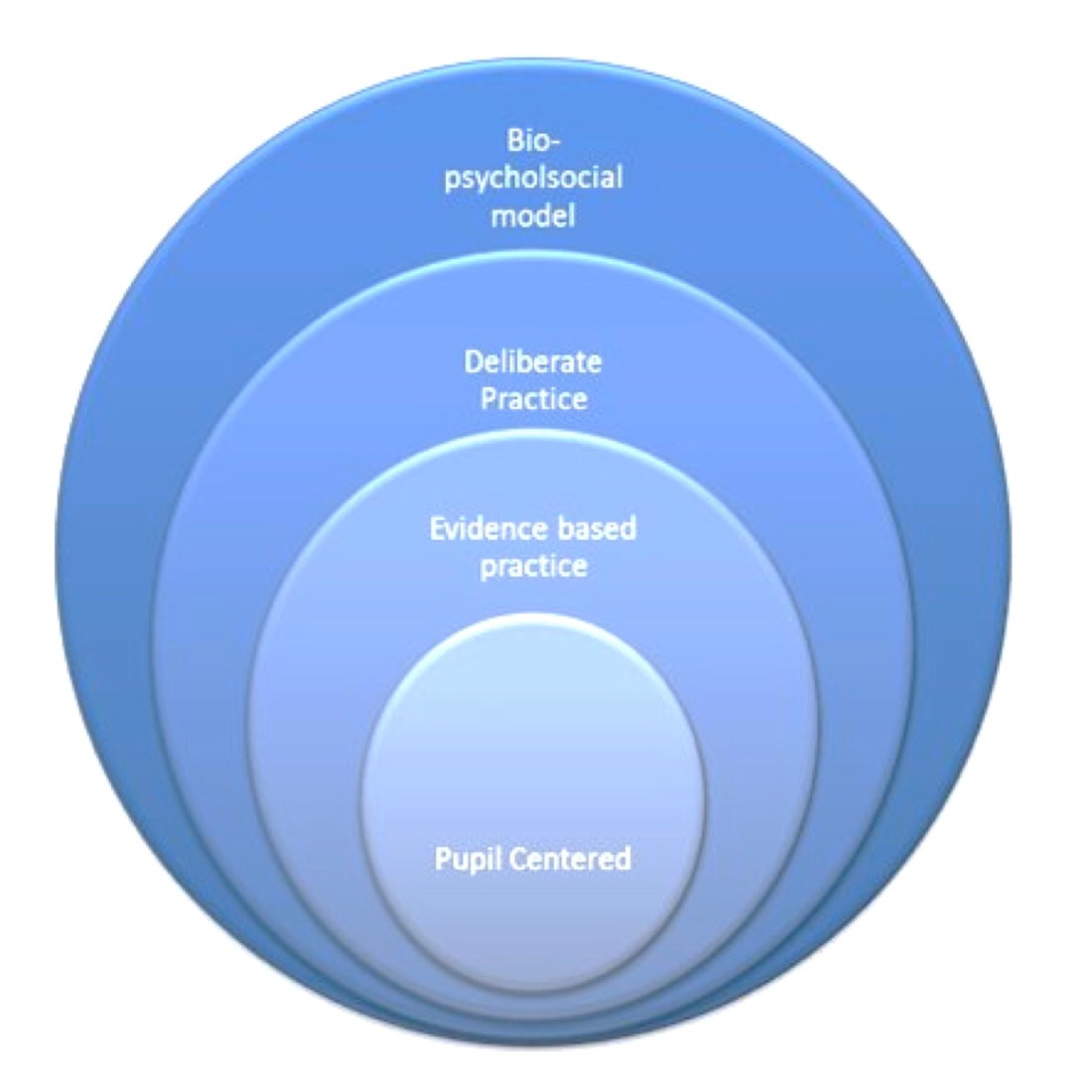
The rehabilitation process is not just about recovery but an opportunity for learning. The educational element of physiotherapy is important way to allow our pupils to be empowered through their rehabilitation. From helping the pupil to understand their injury and how their journey will unfold, to educating them on strategies to help reduce the risk of further injury. Education helps address the pupils perceived barriers and beliefs. We see first-hand how the benefits of pupil education can allow our pupils to take the lead and drive their own recovery because they have the knowledge, skills and confidence to do so.
Goal setting is an industry standard in health care, helping the pupil to feel empowered and shape their rehabilitation. The evidence for self-management interventions that include goal-setting as a core skill shows that people have reduced symptoms, reduced anxiety, and increased perceptions of control and fitness ( Furze 2015,). Goals should direct what we do in physiotherapypractice, forming the basis of the treatment sessions, not just the target for the outcome of treatment.
We have found that a better involvement of pupils in the goal setting process helps to keep the rehabilitation individualised and increases adherence to treatment programmes. Many frameworks for a goal setting exist with the most traditional being SMART goals. I recently read an article around PC: TRICK, that I found useful (Johnson 2010). This framework suggests that goals should be Targeted, Realistic, Individual, Challenging and Knowledge based but always first and foremost PC: Person Centred. The challenge as physiotherapists, is ensuring every pupil leads their goal setting process and that we provide sign posts to help guide them along their journey.
Our pupils vary from recreational players to national and international athletes and no matter their level or ambition we must take an individual approach to their care. Priority is always pupil health and wellbeing. Looking at the whole pupil, rather than just their injury, gives us a comprehensive view and deeper understanding of their needs and aspirations. The strategies above help us to provide a more pupil centre approach, keeping the pupils best interests and goals at the forefront of every decision. In short, our pupil centred approach to physiotherapy allows us to empower the pupil. We aim to provide support ‘with’ and ‘for’ the pupil, rather than passively ‘to’ the pupil, guiding them for a small, but important, part of their journey. This is our pupil centred approach to physiotherapy, what’s your approach?
 Millfield Institute of Sport and Wellbeing